Travel to Gatwick - Crony Cars Gatwick Airport private Taxis

  • http://www.cronycars.com

Friday, 15 February 2013

Stricken Cruise Ship Finally Docks

Carnival Triumph docks (Sky / Rex) 

Relieved passengers stranded on the crippled Carnival Triumph for nearly a week are on dry land.

Thousands of passengers stranded on a crippled cruise ship for nearly a week have finally docked in Alabama.

There were cheers as the Carnival Triumph arrived in the Alabama port, after its first attempt failed when the towline being used to manoeuvre it into position snapped.

Passengers slowly disembarked from the ship in a process that took just under four hours.
Many then faced long journeys home aboard a fleet of around 100 coaches, after days enduring what the company's Chief Executive admitted were "poor conditions".


What began as a four-day voyage in the Gulf of Mexico last Thursday turned into a holiday nightmare.
Passengers have described overflowing toilets and say food has been scarce.
Some of those on board have become unwell.

Speaking as the 14-storey ship docked, Carnival Chief Executive, Gerry Cahill, said that his priority was to go on board to apologise and to help passengers disembark as quickly as possible.

He said: "I know that the conditions on board were very poor. I know it was very difficult and I want to apologise again for subjecting our passengers to that.

"We pride ourselves on providing our guests with a great vacation experience but clearly we failed in this particular case."

The ship left Galveston, Texas, for a four-day cruise a week ago.
It was about 150 miles (240 km) off Mexico's Yucatan Peninsula when an engine room fire knocked out its primary power source, crippling its water and plumbing systems and leaving it adrift on only backup power.
Frustrations with the cruise line were simmering on and off the ship, as passengers and their relatives questioned why it took so long to get back to dry land.

Renee Shanar, of Houston, said: "There's poop and urine all along the floor. The floor is flooded with sewer water ... and we had to poop in bags."

Ms Shanar, who was on the ship with her husband, said the couple had a cabin with no windows, so they slept outside for days.

She said food has been distributed on the ninth floor, and some of the elderly passengers needed younger people to bring it to them.


They were initially only given cold food, like turkey and vegetable sandwiches.
Then another cruise line dropped off hamburgers and chicken sandwiches, but the line for hot food was nearly four hours long.

"And then people started getting sick from the food," she said.
The company has disputed the accounts of passengers who describe the ship as filthy, saying employees did everything to ensure people were comfortable.

Carnival said that passengers would receive a full refund, discounts on future cruises and a compensation sum of \$500 (£322).

The problems are the latest in a string of failures for the massive cruise company.
Most notable was in January last year when the Costa Concordia, operated by Carnival's Costa Cruises, grounded on rocks off the Italian island of Giglio. 

A total of 32 people died in the tragedy, which also unleashed numerous lawsuits against the company.


Sunday, 20 January 2013

The big freeze across the UK

http://media.zenfs.com/en-GB/video/video.thepressassociation.com/Imov1358599692764I-16360-1-640x360.jpg
The big freeze across the UK is here to stay, with more snow expected next week. With travel chaos across the country and Britain's busiest airport being likened to a "refugee camp" amid more than 110 cancelled flights, forecasters predicted further misery in the coming days.

And on Saturday four people were killed and a woman seriously injured after a party of six climbers were hit by an avalanche at Glencoe in the Scottish Highlands. Emergency services were alerted to the accident on Bidean Nam Bian, in Glencoe, this afternoon and a major search operation involving two mountain rescue teams and police dogs was launched.
Following Friday's deluge of snow, much of Saturday's snowfall was limited to the north east of England and the east of Scotland. But on Sunday a blanket of snow is expected to fall across more of the nation, hitting London and the South East of England first before moving north.

Laura Caldwell, of MeteoGroup, the weather division of the Press Association, said: "There will be a few snow showers but heavier snow moving into the south of England and spreading into the Midlands, north east Wales, East Anglia and central England. There will be a quite significant accumulation and it will be seen first in London and the South East before moving north later in the day."
Freezing temperatures which have chilled the UK for the past week will also combine, with more snow in northern England as next week begins, Ms Caldwell added. "It is not going to be getting warmer any time soon," she said.

On Saturday, London's Heathrow airport saw angry scenes as travellers slept on the floor for a second day after flights continued to be hit by the weather. Simon Calder, travel editor of the Independent, painted a bleak picture, saying the scene was like "a refugee camp". BA and the airport insisted they were doing everything they could in difficult circumstances.

Travellers at regional airports including Leeds Bradford, Humberside and Newcastle were also frustrated by delays and disruption caused by the wintry weather. Liverpool John Lennon and Manchester airports were running normally but advised passengers to check with their airlines.

Train passengers did not fare much better, with reduced services across the country. Virgin Trains cancelled a number of services from the capital to Birmingham and Manchester, and others were delayed.
The freezing temperatures also prompted motoring organisations to issue warnings. Darron Burness, the AA's head of special operations, said: "With the snow compacting down and turning icy, we're likely to see treacherous driving conditions throughout the weekend. Any fresh snow on top will just add to the problems."

The Met Office has issued yellow warnings for ice over much of the country - and a red, severe warning for South Wales which experienced the worst of the weather.

Friday, 18 January 2013

Best Security and Immigration Experience – Gatwick Airport


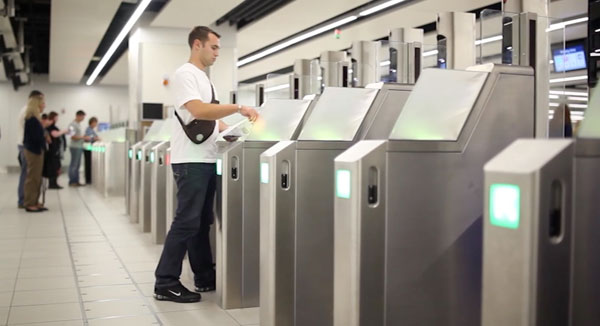
Best Security and Immigration Experience – Gatwick AirportGatwick Airport won the Best Security and Immigration Experience award for the significant upgrades that have been made to the security and immigration processes as part of its £1.2 billion Capital Investment Programme. One of the airport’s passenger commitments is ‘We hate queues’ and the airport is succeeding in cutting waiting times, as is highlighted by the fact that the average waiting time at security now stands at just 107 seconds. To simplify access to the security search zone, facial recognition technology has been implemented, while dedicated special assistance and family lanes have been introduced. The centralised security area in the South Terminal can now handle as many as 5,000 passengers per hour. In both the North and South Terminals, immigration e-Gates have been installed to expedite and automate border clearance for e-Passport holders.

Beat hidden holiday charges

An airplane (Fotolia) 

If you're not careful you could end up paying first class prices for a budget break - don't get ripped off. 

How to beat hidden holiday charges

Thousands more Brits are buying package holidays to keep the cost down, but extra charges could make it an expensive break. Here’s what to watch for and how to beat them.

The number of people booking package holidays is on the rise, according to new figures from the Office for National Statistics.

After years of decline, all-inclusive package holidays are suddenly increasing in popularity again, with some experts suggesting this is because families want to save money.

If you’re trying to save money on a family break then the right package holiday means you pay an upfront amount and know exactly how much you’ll spend.

However much your family eats, drinks and dips in the pool on your break, you won’t be hit with a painful bill at the end of your break.

But even with an all-inclusive break, the cost of a holiday can spiral out of control if you’re not careful. There are loads of additional costs to factor in, which can add up to a painful premium on your package break.

So, whether you’ve already booked your break or you’re just starting to daydream about the sun, here are the extra expenses to keep in mind – and keep as low as possible.

Spending money

If you’re heading overseas then you’ll want to change some pounds into the local currency. But the vast majority of holidaymakers don’t sort out their spending money until the last minute, meaning they don’t find the best deals.

And this can be an expensive decision. The holiday comparison website Travelsupermarket.com has found that the difference between buying currency in advance and buying it at the airport can be more than £150 on €1,500. That would buy a lot of souvenir straw donkeys.


Airport parking

When you’re adding up the cost of a holiday, it’s easy to forget the price you’ll pay to park your car.

Then when you roll up to the airport and discover it’s £60 for four days, it can ruin the start of your trip. But book your parking in advance and you could save as much as 60% on the frankly extortionate fees.

Alternatively, you could hunt around for cheaper options. For example, the website ParkatmyHouse lets you rent a nearby private parking space, usually for far less than an official car park.


Food on the plane

The last time I caught a budget flight, a packet of crisps cost more than £3. If your package doesn’t include meals on the plane then consider taking a packed meal.

Otherwise, you could find yourself paying restaurant prices for a cup of powdered soup.

Airport transfers

Many package holidays include transfers; namely a bus or taxi service that gets you from the airport to your hotel.

But if your holiday doesn’t include that service then you may find you have to pay a high fee to get where you need to go. Again, booking in advance can save you a fortune.

There are plenty of reputable companies advertising online that will make sure you get to your destination with minimal fuss. Booking in advance means you can choose a safe and affordable service for the last leg of your journey.

Uninsured claims

If you’ve booked a package holiday then you may have decided not to bother with travel insurance. After all, package breaks are covered by the Air Travel Organiser’s Licence (ATOL) scheme, which means you won’t be left out of pocket if the travel company collapses.

However, that’s not a good enough alternative to having comprehensive travel insurance in place. If you fell ill before the break, missed your flight because of poor weather, or suffered a bereavement and couldn’t go, you’d be very unlikely to get a refund from the tour operator.

If you’ve spent a few thousand pounds then that’s a lot to lose. But even if you’ve found a real bargain and only spent a few hundred quid on your holiday, it’s a good idea to take out insurance.

Travel insurance can be as little as a few pounds, depending on where you’re going and for how long. With it, you won’t be left out of pocket if you are forced to miss your trip.


Excess baggage fees

The charges for having a slightly overweight suitcase can be painful. Many airlines also impose a size limit on hand luggage, so find out exactly what you’re allowed before you pack. Make sure you’re clear on the limits when you’re packing, as they can really vary between providers.

For example, British Airways charges up to £90 for extra bags while Ryanair will charge an excess baggage fee of up to £20 a kilo. Add that to the price of your holiday souvenirs and they stop looking like such a bargain!

If you’re planning to do some serious shopping on your break then try to leave some of your baggage allowance free. You could also consider leaving cheap toiletries behind to give you a bit more weight to play with on the return flight.

Have you ever booked a bargain break or flight only to be stung by unexpected charges? Share your experience or tips with other readers using the comments below

Friday, 11 January 2013

Gatwick would rival Heathrow with second runway


A second runway at Gatwick would hit fewer people than expanding Heathrow, the Sussex airport's boss has said.

Gatwick's second runway is now being discussedStewart Wingate, chief executive of Gatwick, also dismissed the prospect of a third runway at Heathrow as “unlikely” as he vowed to march onto the west London airport’s “turf” by opening up new routes to the Far East and other emerging economies.
In an interview with The Standard, he was very sceptical about the idea of a Heath-Wick “virtual hub” airport, by joining up

Gatwick and Heathrow with a fast rail link, stressing that it would be expected to cost billions. The proposals for a “Boris island” airport in the Thames Estuary faced economic, safety and access challenges, he added.

Mr Wingate, a former managing director at Stansted, emphasised that Gatwick could expand until the mid-2020s with the use of the existing runway and currently has plans for 45 million passengers a year.
Under an agreement with the local community, a second runway could not be built before 2019.
But experts believe that the Government may eventually back such a development.

“Clearly the density of population around Stansted and I’m sure it’s the same for Gatwick as well is less than the density of population around Heathrow,” Mr Wingate said.

The Civil Aviation Authority said in 2010 that a one runway Gatwick caused an ‘unacceptable’ noise impact across  a 39.6  sq/km area, in which 2850 people lived, in 1250 households around the airport.
The CAA outlined that a two runway Heathrow caused an ‘unacceptable’ noise impact  across a 112.5 sq/km area around the airport, where 245,250 people live. Gatwick Taxis

Unacceptable was described as noise exceeding 57 decibels, averaged out over a 16 hour day.
Mr Wingate expects a fierce campaign by local people to any expansion plans which created more noise around Gatwick and his current focus is firmly on modernising the airport and opening new routes to emerging economies through the use of the single runway.

“We are starting to move onto the turf that to date has been occupied by Heathrow,” he said.
“We are aiming to become London’s gateway to Asia and the emerging economies.”
Just days ago, David Cameron highlighted that Gatwick was emerging as a business airport for London to rival Heathrow.      Heathrow Taxis

Mr Wingate shies away from joining the business chorus saying that the capital’s economy is suffering due to the lack of air links to some cities, stressing that while Heathrow is virtually “full”, Gatwick is expanding.
Air China is starting daily direct flights from Beijing to Gatwick, and Korean Air is launching services to Seoul.

Turkish Airlines, Lufthansa, Hong Kong Airlines, Vietnam Airlines, Air Berlin and Norwegian have also recently been welcomed to the Sussex airport which was bought from BAA by Global Infrastructure Partners in 2009.

But aviation chiefs believe there is likely to be an airport capacity issue in the South East in future decades.
The prospects for a third runway at Heathrow have been reignited by speculation that Chancellor George Osborne believes it should be put back on the table as a possible solution beyond the next election.
Mr Wingate, though, said: “Generally, our perception is that a third runway at Heathrow is not likely to happen.”

On the idea of an estuary airport, he added that there were some “quite significant hurdles”, including the cost which is put by some experts at £50 billion, transport links and safety concerns.
The proposal for Heath-Wick appears “sub-optimal and flawed,” he added.

Best Security and Immigration Experience – Gatwick Airport


Best Security and Immigration Experience – Gatwick AirportLondon Gatwick Airport won the Best Security and Immigration Experience award for the significant upgrades that have been made to the security and immigration processes as part of its £1.2 billion Capital Investment Programme. One of the airport’s passenger commitments is ‘We hate queues’ and the airport is succeeding in cutting waiting times, as is highlighted by the fact that the average waiting time at security now stands at just 107 seconds.

To simplify access to the security search zone, facial recognition technology has been implemented, while dedicated special assistance and family lanes have been introduced. The centralised security area in the South Terminal can now handle as many as 5,000 passengers per hour. In both the North and South Terminals, immigration e-Gates have been installed to expedite and automate border clearance for e-Passport holders.

Monday, 27 August 2012

Airport security: You ain't seen nothing yet


Image: Advance security screening system The Sept. 11, 2001, terrorist attacks forever changed the way Americans fly.
Gone are the days when friends or family could kiss passengers goodbye at the gate, replaced by X-rayed shoes and confiscated shampoo bottles at security checkpoints.
Air travelers are increasingly subjected to revealing full-body scans or enhanced pat-downs — all in the name of keeping the skies safe.

As America prepares to mark the 10th anniversary of the worst terrorist attacks in the U.S., security experts question whether freedom, speed and personal space will one day return to air travel — while still maintaining high standards of safety.

Some security analysts foresee a bumper crop of futuristic detection methods — from biometrics to electronic fingerprinting to behavioral analysis — and predict smoother, nimbler and less-intrusive airport walk throughs in the coming years.
Still others envision Big Brother’s even Bigger Brother: chip-embedded passports that someday tell the federal transportation watchdogs all about your daily commutes to work, the mall — even to parties.

Gazing into the future And then there are experts like Ed Daly who peer into the next two decades of public travel and forecast two possible scenarios — breezy yet virtually bomb-proof security checkpoints or, depending on events yet to come, a far harsher reality that includes a welcome-to-the-airport greeting in the vein of: “Please drop your drawers if you want to get on this plane.”

“The future of transportation security will be gathering intelligence technologically while people are moving at the speed of life, not beginning at a point where passengers are queued up, delayed, stripped down and probed,” said Daly, director of intelligence-watch operations for iJet. The Annapolis, Md.-based firm offers risk-management solutions for more than 500 multinational corporations and government organizations.
Daly cites refinements in software that instantly read and catalog everything from faces to license plates and which, he says, must be expanded to airports, trains, subways and public buildings.
“[But] if technology fails to provide an adequate solution, the option in the face of future attacks would be further restrictions and potential for humiliating human-to-human interaction” rivaling a medical checkup, Daly said.

Nearly 500 advanced imaging technology machines, commonly referred to as full-body scanners, are used in 78 airports around the country. About half (247) use backscatter technology, which emits a small dose of X-ray radiation to present a detailed image of the body — and any concealed weapons or contraband a passenger might be carrying. The other scanners (241) are millimeter-wave machines, which use electromagnetic waves that also present a detailed body image.

Despite policies the TSA put in place — agents who inspect the detailed images sit in a room away from scanned passengers, and the TSA’s insistence that the images cannot be stored or shared — many travelers argue the full-body scanners are an invasion of privacy.
In response, the TSA has begun implementing software on the millimeter-wave machines that will highlight dangerous items but will not show detailed, passenger-specific images.
Meanwhile, other critics — including some scientists — claim the scanners are a health risk, and say there hasn’t been sufficient testing to ensure they won’t cause potential harm.

Behavioral questioning The Transportation Security Administration is currently testing behavioral questioning at Boston’s Logan Airport. Behavior detection officers initiate conversations with all passengers passing through Terminal A, asking non-intrusive questions and watching for responses. Fliers who avoid eye contact or who wrestle to answer certain questions may be pulled out of line for extra scrutiny.

The pilot program is “modeled after a number of behavior-detection programs used by other security and law-enforcement agencies, but tailored to TSA’s specific mission,” said TSA spokesperson Greg Soule.
Frequent flier Andrew Schrage argues that this new approach “crosses into people’s (personal) lives.” “That leaves too much up to the subjectivity of the inquirer,” said Schrage, the Chicago-based editor of MoneyCrashers.com, a personal finance blog. He flies about 20 times per year. “It will also act as a further invasion into people’s privacy.” He anticipates that during the next few years airport security will grow “more and more cumbersome.”

Trusted travelers
The “known traveler program” will be tested this fall by the TSA at airports in Dallas, Miami, Atlanta and Detroit. At those hubs, the TSA will tap into the information ticket buyers have already provided the airlines, including their names, dates of birth and gender.

Ultimately, approved “known travelers” will have bar codes stamped on their boarding passes, authorizing TSA screeners to allow those passengers to skip shoe and laptop removals.
"Enhancing identity-based screening is another common sense step in the right direction as we continue to strengthen overall security and improve the passenger experience whenever possible," TSA Administrator John Pistole said in July.

Are we there yet? One long-discussed hybrid of the “known traveler” program is the “Checkpoint of the Future,” a plan to make screening stops quicker and technologically “smarter,” freeing up TSA agents to “scan the crowd, looking for individuals that could pose an outright threat,” said Peter Kant, executive vice president of Rapiscan Systems, a Hawthorne, Calif., company that provides the TSA with passenger-screening equipment, including the backscatter machine.

In June, the International Air Transport Association unveiled a mockup of the idea — three sensor-lined tunnels that divide passengers into high, medium and low risks.
On Aug. 10, the TSA’s Pistole said such checkpoints “would allow you to keep your jacket and shoes on,” although he acknowledged the necessary technology is “not there yet.”
“Specifically, (when and if that machinery is someday implemented), passengers will notice a much more automated and more intuitive process,” said Rapiscan’s Kant. “Annoying divestiture of jackets, liquids and computers will no longer be required.  Easy-to-use conveyors and bins will allow for swift scanning of bags